
How to Clean a Dishwasher with Vinegar and Baking Soda (Step-by-Step Guide)
Is your dishwasher leaving dishes cloudy, smelling musty, or simply not cleaning as well as it used to? The good news is that you don’t need expensive cleaning products to get it working like new again. Mine was a bit embarrassing, so please…no judgement..lol.
Learning how to clean a dishwasher with vinegar and baking soda is one of the easiest ways to remove grease, eliminate odors, and keep your dishwasher running efficiently. With just a few inexpensive household items and about an hour of time, you can help extend the life of your dishwasher while keeping your dishes sparkling clean. As a homemaker, I love finding ways to save money on cleaning products, and you can’t get much cheaper than vinegar.
▶️ Watch the full video here:
Why You Should Clean Your Dishwasher
Although your dishwasher washes dishes every day, it doesn’t actually clean itself.
Over time, food particles, grease, soap residue, hard water deposits, and moisture begin collecting inside the appliance. These hidden areas can become breeding grounds for mold and bacteria while reducing your dishwasher’s cleaning performance.
Regular dishwasher maintenance helps:
- Remove unpleasant odors
- Improve cleaning performance
- Prevent clogged filters
- Keep spray arms working properly
- Reduce grease and mineral buildup
- Help your dishwasher last longer
Supplies You’ll Need to Clean Your Dishwasher
One of the best things about this cleaning method is how simple it is.
You’ll need:
- White cleaning vinegar
- Baking soda
- Old toothbrush
- Toothpicks
- Sponge or microfiber cloth ( I like Magic Erasers!)
- Hot soapy water (optional)
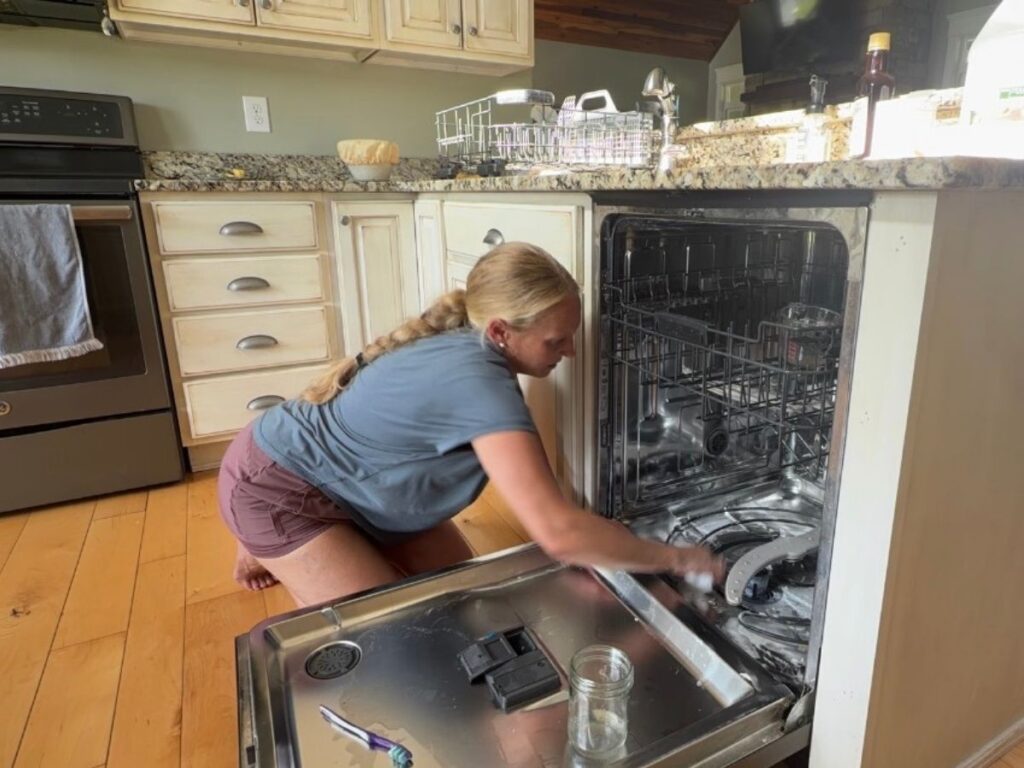
Step 1: Remove the Dishwasher Racks
Begin by removing the bottom rack so you can easily inspect the inside of the dishwasher.
Check for any large food particles hiding around the drain or caught inside the utensil basket.
If needed, rinse the utensil holder in the sink and use an old toothbrush to loosen any stubborn debris.
Even if your dishwasher looks fairly clean, taking a minute to inspect these areas can prevent future clogs.
Step 2: Clean the Dishwasher Filter
The dishwasher filter is one of the most important parts of the entire cleaning process.
Its job is to trap food particles so they don’t get redeposited onto your dishes. As the filter fills with grease and debris, water flow becomes restricted, making your dishwasher less effective.
Remove the filter according to your owner’s manual.
Spray it thoroughly using your kitchen faucet before gently scrubbing it with an old toothbrush.
If there’s heavy buildup, soak the filter in hot, soapy water for about 20 minutes before scrubbing again.
Once clean, rinse it well and reinstall it.
While the filter is removed, wipe around the filter housing using a vinegar and water solution.
Step 3: Check the Dishwasher Spray Arms
Your dishwasher spray arms contain small openings that distribute water throughout each wash cycle.
When these tiny holes become clogged with food particles or mineral deposits, your dishes won’t come out as clean.
Inspect each spray arm carefully.
If you notice blocked holes, gently clear them with a toothpick before running your cleaning cycle.
This quick step helps improve water flow and overall cleaning performance.
Step 4: Clean Your Dishwasher with Vinegar
Now it’s time for the deep cleaning.
Fill a dishwasher-safe cup with one cup of white cleaning vinegar.
Place it securely on the top rack.
Before starting the dishwasher, run your kitchen faucet until the water becomes hot. This allows the dishwasher to begin its cycle with hot water immediately.
Run the hottest wash cycle available or choose the Sanitize cycle if your dishwasher offers one.
As the vinegar circulates, it helps dissolve grease, mineral buildup, soap scum, and lingering odors.
Step 5: Freshen Your Dishwasher with Baking Soda
After the vinegar cycle finishes, sprinkle one cup of baking soda across the bottom of the dishwasher.
Run another short hot cycle.
Baking soda helps neutralize odors while gently removing any remaining residue.
Once finished, wipe down the door, gasket, and interior using a sponge and warm water or a simple vinegar solution.
Leave the dishwasher door slightly open to allow the interior to air dry completely.
Why Vinegar and Baking Soda Work So Well
Many homeowners wonder why this simple cleaning method is so effective.
White vinegar helps break down grease, soap residue, hard water deposits, and mineral buildup while naturally reducing odors.
Baking soda helps neutralize lingering smells and gently lifts away remaining residue without scratching surfaces.
For best results, use them one after the other rather than mixing them together.
How Often Should You Clean Your Dishwasher?
For most households, cleaning your dishwasher once a month is a great routine.
If you only use your dishwasher occasionally, cleaning it every few months may be enough.
However, if you notice cloudy dishes, unpleasant odors, standing water, or visible food buildup, it’s time to clean it sooner.
Tips to Keep Your Dishwasher Cleaner Longer
A few simple habits can help your dishwasher stay cleaner between deep cleanings.
- Scrape large food particles off dishes before loading them.
- Clean the filter regularly.
- Check the spray arms every few months.
- Leave the dishwasher door cracked open after each cycle so moisture can escape.
- Wipe around the rubber door seal regularly to discourage mold and mildew.
These small habits only take a few minutes but can make a big difference in how well your dishwasher performs.
Frequently Asked Questions About Cleaning a Dishwasher
Can I use any type of vinegar?
White cleaning vinegar is the best choice because it’s inexpensive, effective, and leaves very little residue.
Is baking soda safe for dishwashers?
Yes. Baking soda is a gentle deodorizer that helps freshen the interior while removing light residue.
How do I know my dishwasher needs cleaning?
Signs include unpleasant odors, cloudy dishes, visible food buildup, standing water, or poor cleaning performance.
Will cleaning the filter improve dishwasher performance?
Absolutely. A clean filter allows water to circulate more efficiently, helping your dishwasher clean dishes more effectively.
Time to Be a Doer & Clean Your Dishwasher
Taking a few minutes each month to clean your dishwasher can make a noticeable difference in how well it performs. By cleaning the filter, checking the spray arms, and running simple vinegar and baking soda cycles, you’ll help reduce odors, improve cleaning power, and keep your dishwasher running efficiently for years to come.
Simple routines like these make homemaking easier, save money on repairs, and help create a home that feels clean, peaceful, and well cared for.

Anna Barbour
Hey there, my name is Anna, and I am so excited to share Keep It Simple Anna Sue with you. I am a wife, mother of two young men, and currently in a pre-empty nester season of life. God knew I needed blogging way before I did. Being a pre-empty nester has left me with…extra time. I decided to use that time for creativity and for helping others to see that if I can do it, they can do it too. Learn more about me.
